Saturday, September 6, 2014

Sermon Series Web Graphics

Last summer I had the awesome opportunity to design the website graphic for my church's sermon series in Book Two of the Psalms. Since then, I've had the pleasure of working with one of the pastors to create several additional sermon banners. The process has been fun and it has been a chance for me to expand my graphic design exposure.

Next week, we will begin a sermon series on the story of Joseph contained in Genesis chapters 37 through 50. The title of the series, God Meant it for Good: the Gospel According to Joseph, is based on a passage at the end of chapter 50 where Joseph reassures his brothers, who had previously sold him into slavery, that what they had meant for evil, God had meant for good. (Read the whole story starting in chapter 37.)

Now, when many people think of Joseph, they think of his famous coat of many colors. Though the coat is a relatively small detail near the beginning of Joseph's story, this was my first association as well, and I initially started thinking of using a colorful textile pattern as the backdrop for the graphic. However, I was unhappy with the uber-literal concept. We weren't, after all, staging a revival of Joseph and the Amazing Technicolor Dereamcoat! I began to wonder, what could I use that is colorful, textured, and layered, but isn't a literal piece of fabric?

After some web sleuthing, I settled upon the hand-marbled end papers often found in antique books, and I remembered that I had just the book: a mid-nineteen century edition of Alexander Pope's poetry with some awesome marbling. I photographed the end papers and, through the magic of Photoshop, transformed the warm palette of the original to a cool blue palette that worked with the blues of the church logo and website.


With the addition of simple text, including the series title and key verse, the result is a textured, colorful graphic that, I hope, offers open associations. Yes, it is colorful like Joseph's coat. But it is also textured, layered, and nuanced--much like the story of Joseph. It also brings to mind, perhaps, the old family Bible, passed down through generations. Or the textures of a middle-eastern desert. Or perhaps the subtle blue waves of the Nile River from Joseph's Egyptian exile.


Within the past year, I've also produced two additional website graphics.

Our previous Sunday morning sermon series, which began in fall 2013 and was completed over the course of a year, was entitled Looking to Jesus: A Series in the Book of Hebrews. The solution for that particular graphic was entirely typographical, with the series title and key verse floating over top of a background listing all of the names of Jesus used in Hebrews.


Lastly, the Sunday evening sermon series for fall 2013 was entitled The Real Jesus: A Series in the Gospel of Mark. For the website graphic, a simple silhouette of Jesus from one of the church's stained glass windows is cut out of a cool blue background gradient based on the colors of the church's trefoil logo.


Tuesday, September 2, 2014

Doodle-a-Day

"A drawing is simply a line going for a walk." - Paul Klee 
Wow, I can't believe it's been almost a year since I last posted on my blog. I'm going to have to work on that!

I was recently feeling a little sad that I don't often find the opportunity to sketch or draw in my usual work and life schedule. I got to thinking about people who make a sort of photo journal where they post a photo each day for a year. Although I love walking around with my iPhone camera and usually take (and post on Facebook) lots of photos, I wanted my "challenge" to be a bit more hands-on.

So, I'm going to try to do what I hope will be daily (or at least frequent!) sketching. No rules. Just trying to keep creativity flowing by doing one drawing a day. In order to hold myself a little more accountable, I'm going to post the fruits of my labor here, tagged with "Doodle-a-Day."

Here goes...


Friday, September 20, 2013

The Rite of Spring

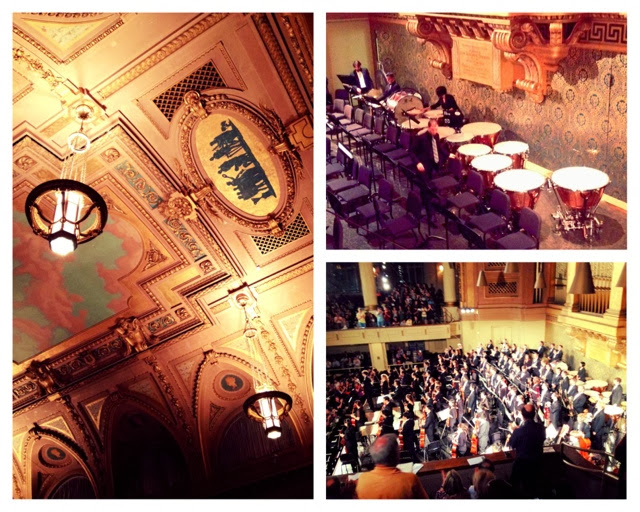
Tonight we went to the Yale Philharmonia's performance of Igor Stravinsky's Rite of Spring at the incomparable Woolsey Hall. It was quite possibly the best live performance I have ever been to, not just for the skill of the instrumentalists, but also the magnitude of the piece. (And it didn't hurt that we've been living and breathing the Rite over the past few weeks. I think the preparation and anticipation made the performance that much better.)  All I could think afterwards was, "Now THAT's how you use an orchestra!"

Is it perhaps my new favorite piece? Maybe. Would I go see it again any chance I get? Definitely!


It was such a real joy to go to the concert with the kids, too. After all the fantastic work they did getting excited about the Rite with our lessons and activities, the night out was a real treat. They all seemed to have loved it, and we were all quite literally on the edges of our seats! We were all tracking the ballet in our minds, cringing, for instance, when the Chosen One fell outside the circle for the second time or began her dance to the death!

The orchestra was great, and now when I listen to my recording of The Rite of Spring, I am sure to hear more nuances than before. We all loved the woman who played the principal timpani, she had such poise and energy. (There was quite a percussion section, including 10 timpani, a bass drum, a gong, cymbals, and a number of small instruments.) And the bassoon soloist nailed the beginning of the piece!


Fortunately there was no riot like at the 1913 premier. But there was a well-deserved ten minute standing ovation!

Congratulations, Yale Philharmonia, on a job well-done!

Thursday, September 19, 2013

Writing The Rite

Putting together lessons on The Rite of Spring for the kids recently has gotten me really interested (OK, read "obsessed") with The Rite. Not just as a piece of music, as we will hear tomorrow at the concert, but as an event, a performance, a ballet, a turning point, a masterpiece . . . but most of all, as a work of art that has inspired many for the past 100 years.


Having access to Yale's vast collections is one of the benefits of working for the University, so I picked up a few tomes for light reading. In case you find yourself in the mood to learn more about The Rite of Spring, these should get you started:

  • Avatar of Modernity: The Rite of Spring Reconsidered (2013) is an anthology of essays published just this year in celebration of the centenary of The Rite of Spring. It brings together experts from numerous fields with new scholarly writings. I think I am going to tackle this bad boy first!
  • Stravinsky: The Rite of Spring (2000) by Peter Hill "provides a comprehensive guide to the work, telling in vivid detail the story of its inception and composition, of the stormy rehearsals which lad to the scandalous premiere on 29 May 1913." I'll take the cover's word for it as I have not yet started reading this volume.
  • Nijinsky's Crime Against Grace: Reconstruction Score of the Original Choreography for Le Sacre du Printemps (1996) presents Millicent Hodson's research into the original Nijinsky choreography, which was lost following the ballet's premier. Her research was used in 1987 to stage the ballet with the original choreography for the first time in more than 70 years. The preface of the book is a good scholarly essay in and of itself.
  • Stravinsky in the Theatre (1949) has several chapters which discuss The Rite of Spring.
  • Since I am sometimes a dork and enjoy looking at the music while listening to recordings, I also checked out the full orchestral score of The Rite of Spring. The version I have was published by Boosey & Hawkes in 1997 based on the 1967 re-engraved edition of Stravinsky's 1947 revisions. (Say that 10 times fast!)

In the mean time, less than 24 hours until we hear The Rite of Spring live! Can you tell that I am excited?

Tuesday, September 17, 2013

The Rite Stuff - Lesson 5 - Interpretations

Introduction [15 min]

In the 100 years since it premiered, The Rite of Spring has inspired many people to create new and interesting works of art or interpretations of the piece. Watch excerpts from the following interpretations:
What do you think about what you just watched? Were some interpretations better than others? Which one did you enjoy most? Least?


Activity [30-45 min preparation; 5 min performance]

Work together as a team to select a movement from The Rite of Spring and choreograph your own production. Use all you have learned as you consider the choreography, set design, and costumes, and how they relate to the story and the music. Perform the piece for your audience.


Results

We had to modify our activity for the evening as Luana sprained her ankle earlier today. We joked that she might actually die if she tried to dance the final dance of the Chosen One with a sprained ankle!

However, it sounds like the kids are excited to put on their own choreography at a later time, complete with costumes etc. I will be sure to post another update when they do!

In the mean time, I thought I would put up the kids' favorite Rite interpretation, below. (They also enjoyed the dinosaurs from Fantasia.)


[Note: I sometimes enjoy reading music while listening to music, so I absolutely love these graphical scores. The same author has uploaded many different classical pieces, just click around YouTube to find them. They are fascinating to watch!]

Monday, September 16, 2013

The Rite Stuff - Lesson 4 - Setting the Stage

Introduction [10 min]

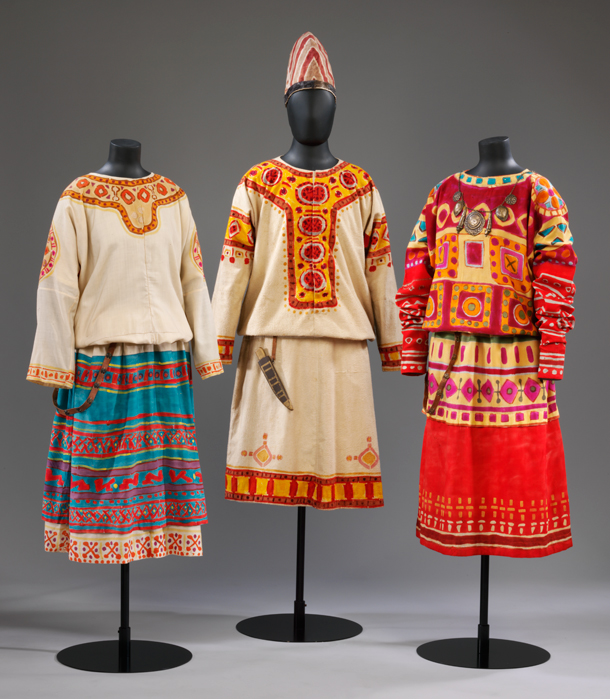
The set and costumes for The Rite of Spring were designed by Russian philosopher, archeologist, and artist Nicholas Roerich.


Discuss the importance of set and costume design in setting the mood and tone for stage performances such as ballet, theatre, or musicals. How might different costumes or sets change the way a piece is interpreted by the audience? Is there room for directors, set designers, costume designers, and choreographers to re-interpret the performance of the original ballet?


Activity [30 min]

Imagine you are a designer for a modern-day production of The Rite of Spring. Make a sketch for one of the stage backdrops you might use. Then, using a fashion-design underlay, sketch your own costumes for the characters in the ballet. Share your work with the group.


Results

In order to aid with our inspiration, we decided to listen to a recording of The Rite of Spring while we were drawing and designing.

Brayan (age 8) designed a forceful backdrop which shows the sun as well as the dark purple of the evening all in one. His costume designs are rendered in vibrant oranges in bold patterns. The male dancer's headband and the female dancer's braids are primitive in nature, taking inspiration from the revival performance of the ballet we watched previously. Brayan could easily grow up to be a fashion designer--his style is immaculate...and those shoes! Do you see the designer shoes on her feet!?


Luana (age 9) was inspired by the geometric patterns embroidered on the original costumes from the 1913 ballet when she drew her backdrop, a pattern of shining stars, circles, and triangles (inspired by the hats from 1913). The costume design, while paying homage to the "primitive" 1913 costumes, have lines, patterns, and colors all her own. I love the palette she chose. The seemingly opposing colors of the male and female dancers are all brought together in the backdrop. The female dancer's long beaded hair is really something! 


Lucas (age 11) suggested the ballet's theme of sacrifice quite forcefully in the design of his backdrop, which illustrates a giant hand descending from the clouds lowering a helpless maiden toward an infernal sun. His costumes are a study in contrast, with somewhat bulky male clothes in opposition to the tight dress on the female dancer. And I think she might be wearing fishnet stockings. I love their crazy hair!


I also tried my hand at a set and costume design. I was going for a bit of a minimal theme in the backdrop, so layers of spring greens fill the stage. Subtle orange and blue lines play off the predominantly blue and orange costumes of the dancers, which were intended to be minimal in cut and line, but with spring-like accessories. Both male and female dancers have vines around their legs and are wearing laurel crowns to welcome the spring.

Sunday, September 15, 2013

The Rite Stuff - Lesson 3 - The Riot at the Rite

Introduction [15-20 min]

The audience’s reaction to the premier of The Rite of Spring is legendary. Watch an excerpt from the BBC movie Riot at the Rite [45:15 - 1:25:16 documents the entire ballet and the audience reaction; clicking through a few parts should be sufficient for the lesson; note if you are showing the video to children, be aware that there are some scenes, mostly outside this time range, which show aspects of the homoerotic relationship between Diaghilev and Nijinsky, however, there is a kiss backstage at the conclusion of the ballet at 1:23:32]. Now read from the 1913 article published in the New York Times, “Parisians Hiss New Ballet.” Then listen to an excerpt from Radiolab’s “Musical Language” [+/- 32:00 - 35:00] and then consider the following questions:
  • Why do you think the audience responded in the way they did? [Conductor Michael Tilson Thomas of the San Francisco Symphony tells us that the audience would have been “expecting to see something bright, colorful, exotic, with lots of leaping, lots of diaphanous costumes that would give you occasional lovely glimpses of gorgeous anatomy. That's not what they got. They got a very dark piece with people mostly moving on the floor, even writhing on the floor. They were all wearing very dark costumes that looked like animal skins and they had very puffy sleeves and hats and very odd, strange movements that they made — very angular, funny movements. And, of course, there was a score, which was at that time being very courageously played, but which must have been right on the edges of what was comprehensible to the musicians and the public."]
  • Compare your knowledge of The Rite of Spring to images of other ballets that preceded it, like Swan Lake, The Nutcracker, Don Quixote, and Les Sylphides. What differences do you notice?


Activity [15-20 min]

Discuss what a critic is. Pretend you are a music critic having just seen a performance of The Rite of Spring ballet for the first time today. What would you tell others about the ballet? Write your own short review of The Rite of Spring and then share your review with the group. You may want to touch on your reactions to the music, the choreography, the scenery, the costumes, the dancers, and the story-line. Be sure to come up with a catchy newspaper headline for your piece!


Results

We had another really successful lesson and the kiddos were able to understand, even just based on their own preconceptions of ballet, why the audience might have reacted in the way they did. And they did a really great job on their reviews! I am so proud of them.

I have transcribed their awesome articles from kid-ese below.


Brayan (age 8):


The music was very wise. It was a huge piece of art. It was lovely. The dancers were a little rough at the second piece. It seemed like everything was blooming. The piece of music seemed like it was floating. The music was strong. In part two [it was] a little freaky [and] at the end [it] was nice [and] low.

SHATTERING GLASS
[Brayan said he put the title at the end of the review because the end of The Rite of Spring sounds like shattering glass, and so he wanted the title at the end of the review. Notice also the stage curtain surrounding the title.]


Luana (age 9):


THEY THOUGHT IT WAS ONE THING BUT IT WAS ANOTHER

I loved The Rite of Spring. There was lots of people there. In the beginning of the music it was nice and calm, the music was loud. I really enjoyed the ballet but there were some people that did not like it. They thought the ballet would be like pretty people dancing with tutus and high jumps but it was something totally different. It was unique. People don't usually see that kind of stuff.

Well I enjoyed The Rite of Spring because if you really thought about it and saw all the little parts and interesting things that there were I think you might enjoy it too.

The setting was nice for the background of Act 1. [It] was tall, bumpy, dark mountains. There was Act 2 and Act 1. They were totally different from each other. Act 1 was bright and sunny, Act 2 was sad [and] dark. All the costumes sort of looked the same.

I hope you enjoy when you go see it.


Lucas (age 11):


HUMANS THAT WEREN'T THERE, LISTEN

The music started out friendly. But after a couple of minutes it was scary and was that way through most of the ballet. There was loud low pitches that made you want to lower the music.

I could see how the music went well with the story. I understood that at the end when the girl was dancing she was tired and wanted to give up.

The costumes didn't look normal at all. The boys had tall orange hats, and some of the actors had animal skins on their backs. Their dresses and robes were long and loose. Long enough to trap air inside when the girls twirled around.

The stage looked like they were in a forest with a mountain. The mountain had a little bit of snow at the bottom so that kind of gave me a clue that winter was just about over and the people were celebrating spring.

The dancers sure had interesting moves. They were excited and put lots of effort into their stomps. They jumped very high and looked like their faces were petrified!

Saturday, September 14, 2013

The Rite Stuff - Lesson 2 - The Story of the Rite

Introduction [10 min]

Now often performed as a stand-alone piece of orchestral music, The Rite of Spring was written by Igor Stravinsky as a ballet. It was first performed by the Ballets Russes in Paris under the direction of Sergei Diaghilev with choreography by the famous Russian dancer Vaslav Nijinsky. Discuss the following topics as a group:
  • What is a ballet?
  • What is a “Rite”?
  • The piece was originally known as The Consecration of Spring. What does “Consecration” mean?
  • What does “Spring” usually remind you of? How might the concept of “Spring” relate to the story of The Rite of Spring?
  • The subtitle of The Rite of Spring is “Pictures of Pagan Russia in Two Parts.” What does “Pagan” mean?
Using the above questions as a framework, describe the basic plot premise of The Rite of Spring, in which pagan tribes celebrate the renewal of the earth in a ceremony in which a young maiden is chosen as a sacrifice to please the god of spring.


Activity [30 min]

Watch excerpts of the original ballet choreography, which was revived by the Joffrey Ballet in the 1980s. Pay special attention to the relationships between the music, the choreography, the costumes, and the scenery. At the end, share your thoughts about the ballet with the group. Did the ballet effectively tell a compelling story without the use of words?


Part 1: The Adoration of the Earth
  • Introduction [0:00] - Instrumental
  • The Augurs of Spring [3:00] - Spring is celebrated as an old woman tells the future
  • Ritual of Abduction [6:08] - Tribal dance
  • Spring Rounds [7:30] - Tribal dance
  • Ritual of the Rival Tribes [11:14] - Tribal dance
  • Procession of the Sage [13:03] - The old Sage enters and blesses the earth
  • Dance of the Earth [14:08] - The tribes dance to celebrate the earth


Part 2: The Sacrifice
  • Introduction [15:22] - Instrumental
  • Mystic Circles of the Young Girls [15:50] - The girls dance in circles to select the Chosen One
  • Glorification of the Chosen One [18:30] - The girls dance around the Chosen One
  • Evocation of the Ancestors [20:30] - The ancestors are summoned by the girls
  • Ritual Action of the Ancestors [21:05] - The ancestors dance around the Chosen One
  • Sacrificial Dance [24:24] - The Chosen One springs to life and dances herself to death

Results

Before we watched the video of the performance, we had a lively discussion about ballets, rites, and pagan ceremonies.

When asked what a ballet was, Luana said, "it's dancing like this," as she put her hands in a circle above her head. Lucas added that the dancers wear tutus. We decided that a ballet was a dance that told a story without any words like a play or musical might have. I asked them to remember their preconceptions about ballets and see whether The Rite of Spring was what they expected.

We also talked about the plot of the ballet and how some "pagan" religions believed in offering sacrifices to their god(s) at different times of year to ensure a fruitful season. So as not to disturb the younger kids too much, I did soften the concept of the human sacrifice. Basically, we talked about how the Chosen One, once selected, would dance in a frenzy until she collapsed and died of exhaustion. Some of them were concerned that this might be a true story, and we reassured them that it was a fictional story and a piece of art to enjoy.

In the end, the kids really loved watching the ballet. Afterwards they described the story-line as "creepy-cool." One of them came to me later, clearly having thought about the ballet some more afterwards, and said, "you know, that was really disturbing." Luana was super-psyched about the whole thing and is actually watching the ballet again as I write this.

The kids were particularly taken by the Sacrificial Dance of the Chosen One in the last few minutes of the ballet. After the video finished, they were inspired to jump around the kitchen re-enacting the many leaps of the Chosen One (below right). They also joined hands and stood up on their tippy-toes in a recreation of the groups of dancers in the Spring Rounds (below left).


The Rite has even had an impact on their play. This afternoon I walked over to their setup to find the Disney princesses re-enacting the selection of the Chosen One. I never thought I would be so proud to overhear one of my children say (and with such glee), "they're deciding which one of them is going to die!"